360° photography is now offered by many suppliers in Saudi Arabia, at prices ranging from a few hundred riyals to tens of thousands for a single project. That spread is not arbitrary, but it is opaque to anyone buying for the first time.
This article explains what you are actually paying for, how to compare two proposals, and which questions reveal the difference between a serious supplier and someone selling a camera and a link.
What 360° photography is
360° capture records the entire scene around a single point — horizontally and vertically — producing an image the viewer can turn inside rather than look at from outside.
When several such images are captured from multiple points in a space and linked together, you get a virtual tour: the visitor moves from point to point and explores.
That is the basis. What suppliers build on top of it is where the price differences come from.
Where the cost actually goes
Number of capture points. Each point takes time on site and time in processing. A building needing twenty points is not merely twice the effort of one needing ten — the linking and quality checking scale too.
Capture quality. A consumer camera costing a few hundred riyals produces a result that is acceptable on a phone and disappointing on a large screen. Professional equipment differs in edge sharpness, low-light performance, and colour consistency between points.
Processing. This is where most of the gap between quotes hides. Colour matching between points, removing the photographer from the image, handling blown-out windows, levelling the horizon — all of it is human work after capture. The cheap quote usually omits this stage.
Preparation. A tidy space is photographed once. A space photographed as found and then revised is photographed twice. Ask who is responsible for preparation before it surprises you.
Hosting. The tour has to live somewhere, and that is a recurring annual cost, not a one-off. Many quotes leave it out deliberately.
360° or a 3D model?
This is the most important question, and the most confused.
360° photography displays. It moves you visually between fixed points. There is no solid model of the space, nothing can be measured, and the space cannot be viewed from above.
3D scanning represents. It produces the actual geometry: free movement, measurement, an overhead view, and an extractable floor plan.
The practical rule: if the purpose is for the visitor to see, 360° is sufficient and cheaper. If the purpose is to decide, measure or document, you need 3D scanning, and no number of 360° points substitutes for it.
Do not buy the more expensive option by default. Buy the one that matches the purpose.
Where 360° works in Saudi Arabia
- Hotels and hospitality — rooms, facilities, function halls. The visitor wants to see, not to measure
- Restaurants and cafés — atmosphere transmits well in this medium
- Event venues — the client wants to picture the space before booking
- Exhibitions and events — fast documentation that outlives the event
- Retail and showrooms — a walkthrough that precedes the visit
And where it does not work alone: selling residential units (needs measurement), facilities documentation (needs geometry), and handover files (need a measurable reference).
An example: two quotes with the same description and very different prices
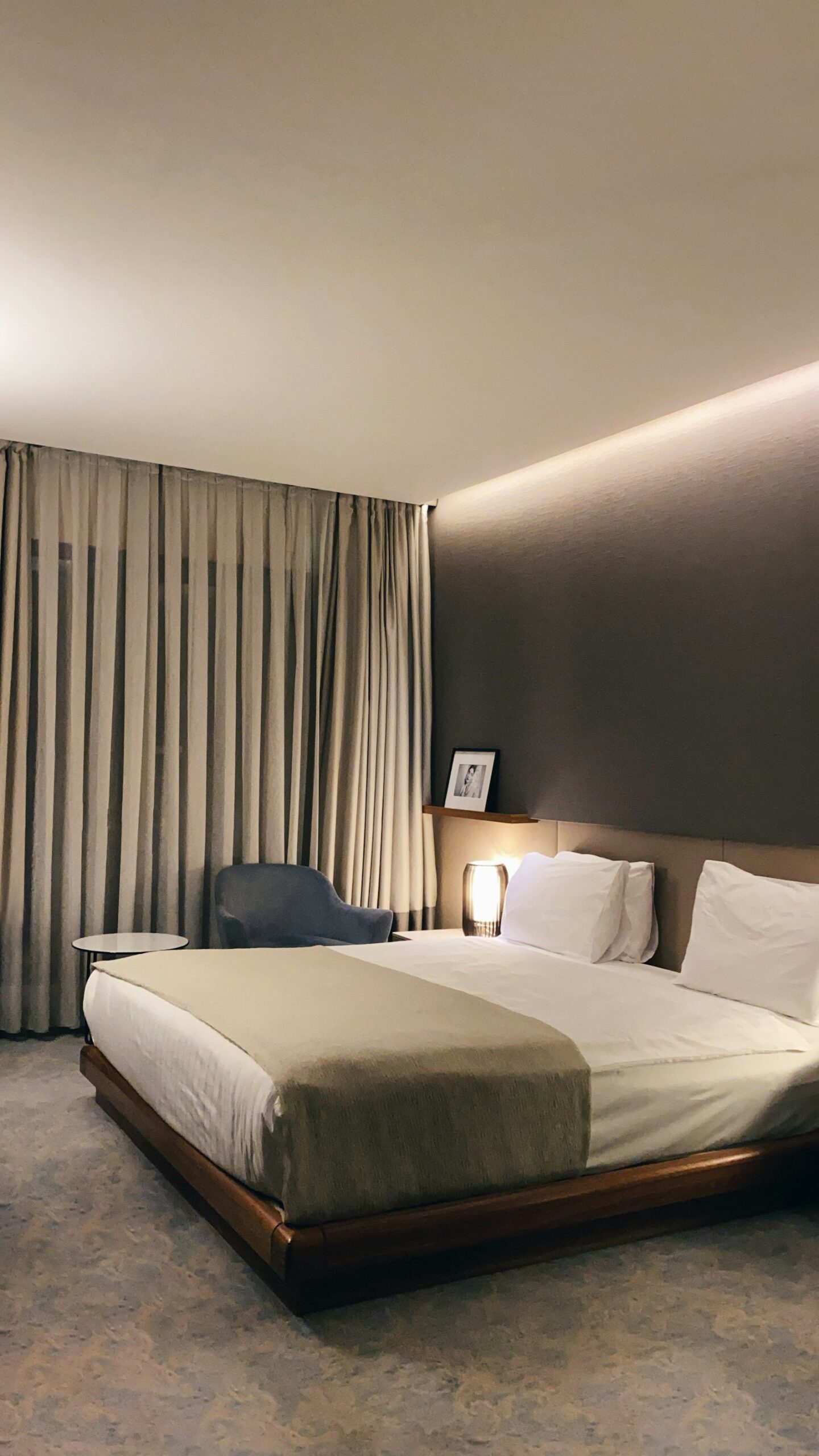
Picture a hotel in Jeddah requesting 360° capture of fifteen room types, three function halls and the reception area. Two quotes arrive, both saying “360° virtual tour, delivery in two weeks.”
The first includes one capture point per room, basic processing, one year of hosting on the supplier’s domain, and delivery of a link.
The second includes two to three points per room depending on size, consistent colour matching across every point, treatment of blown-out windows — a real problem in Jeddah rooms with a view — removal of the tripod and reflections, high-resolution stills usable on the website and booking platforms, embedding inside the hotel’s own site, and delivery of the original files.
The price difference may be twofold. The difference in result: the first looks acceptable on a phone; the second sits on a desktop booking page and looks like the hotel itself.
Which quote is correct? It depends on where the tour will be shown. If it is going into an Instagram story, the first is more than enough. If it is going on the booking page and into a file sent to travel agents, the first will cost you more — because you will reshoot within a year.
The lesson: do not compare price against price. Compare price against where the result will be displayed.
Ten questions that reveal the supplier
- How many capture points are in the quote, and what does each additional point cost?
- What capture equipment, and what is the final image resolution?
- Is colour matching between points included?
- Are the photographer’s shadow and the tripod removed from the images?
- Where is the tour hosted, and what is the annual cost after year one?
- Does it embed directly in our site, or open on your domain?
- Who owns the original high-resolution files?
- Can we edit hotspots and text ourselves afterwards?
- Does the interface genuinely support Arabic and right-to-left layout? Show us an example.
- How long is delivery from the shoot date?
A serious supplier answers all ten with numbers. Anyone answering in generalities will surprise you later with an invoice or a restriction.
In short
360° photography is an excellent and relatively inexpensive display tool when the purpose is for a visitor to see a place before coming to it. It is the wrong choice when the purpose is measurement, documentation, or proving condition.
Know which you need before requesting a price, and ask about hosting and ownership before you sign. Those two clauses — not the shoot price itself — determine whether you are buying an asset or a subscription.
Chameleon Tour produces 360° photography and 3D documentation for hotels and facilities across Saudi Arabia. Get in touch to work out what suits your project.